Prince Rama Varma: All Twelve Notes, Not One Raga
Prince Rama Varma names a quiet shortcoming in Carnatic music education — even advanced musicians are usually trained to identify Swaras within one raga at a time. Here is why that gap exists, and how to close it.
In a lecture titled Introduction to the 12 Notes, Prince Rama Varma — a senior Carnatic musician, composer, and teacher — points to a quiet but persistent shortcoming in Carnatic music education. Even highly accomplished musicians, he observes, are typically trained to identify Swaras only within the context of one raga at a time. Asked to produce or recognise a Swarasthana out of that context, they have to pause and think.
It is a teaching that cuts close to home for many of us learning Carnatic music.
Watch the Lecture
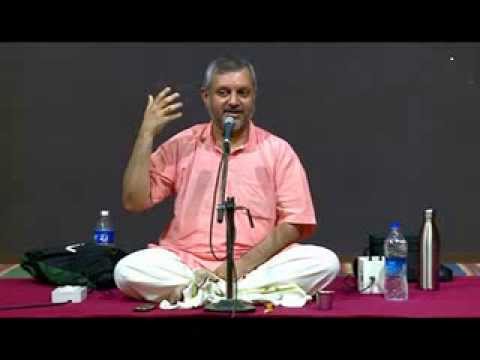
Prince Rama Varma — Introduction to the 12 Notes
Watch on YouTube
Opens on YouTube in a new tab. Source: Prince Rama Varma — Introduction to the 12 Notes.
Three Moments Worth Marking
A few statements from the lecture stand out:
10:06"We (Carnatic musicians) are always trained to identify swarams of one raga only."
11:45"Many Carnatic musicians I myself know, they would be qualified to give a Ragam-Tanam-Pallavi in Todi correctly. But if we just ask them to sing Prati Madhyamam, immediately, they have to think a little bit. If someone asks you your name, you don't have to hesitate, you'll tell immediately. Like that we have to know all the 12 notes, not just the notes of one raga."
12:37"Like a keyboard, in our throat, in our ear, in our brain, all 12 notes have to be fixed."
These are not throwaway remarks. They name a real gap in how Carnatic music is traditionally taught. The raga-by-raga approach is deep and rewarding — but it does not naturally produce a musician who knows all 12 Swarasthanas as independent pitches.
Why the Gap Exists
Carnatic pedagogy is built around immersion in a raga. You learn its arohanam and avarohanam, you sing its kritis, you internalise its phrases (prayogas) and gamakas. The Swarasthanas of that raga become intimately familiar — but they are familiar within the raga's vocabulary. The same Shuddha Rishabam in Mayamalavagowla and in another raga sounds the same in pitch, but the student associates it with one mood, one set of phrases, one feel — not as an abstract pitch position on a fixed grid.
Over years this builds extraordinary depth in individual ragas while leaving the underlying Swara grid less explicitly mapped. A musician can perform a full Ragam-Tanam-Pallavi in Todi from feel and intuition, yet still need a beat to retrieve Prati Madhyamam in isolation — because the latter is a pitch query, not a raga query. Different mental machinery is doing the work.
How SwarDrishti Helps
Building the "keyboard in the throat, ear, and brain" Prince Rama Varma describes requires practice that is explicitly about the twelve Swarasthanas, not about any single raga. SwarDrishti is designed around this principle.
In every exercise, Sa is your only anchor — there is no raga context, no arohanam to lean on. The app plays one random Swara at a time, drawn from the full set of twelve Swarasthanas, and you identify it. Over a session you encounter all the variants in random order, with per-Swara accuracy tracking that highlights exactly which Swarasthanas are still soft for you.
The Vocal Playground then closes the loop on the other half of the gap — the production side. It is not enough to recognise Prati Madhyamam when you hear it. You also have to be able to sing it cleanly from any reference Sa, the moment it is asked of you. The Vocal Playground listens to your voice and scores how close each Swara lands to the target pitch in real time.